

Most self-defense advice assumes you’ll stay on your feet. A slip on an icy parking lot, a shove from behind, or a grab you didn’t see coming can change that in a second. Ground self-defense is about what you do next, and it’s the part of the picture a lot of people never train at all. Many confrontations end up in grappling range at some point. Someone grabs, someone pulls, and people fall. If the only thing you’ve ever practiced is standing up, the ground is a very lonely place.

Why the ground changes everything
On your feet, you have options. You can step back, turn, or run. On your back, most of those options are gone.
A few things happen at once. Gravity starts working for whoever is on top. If they’re bigger, their weight alone is a problem. Strikes come down at you instead of across. And the most natural human reaction, which is to push with straight arms and try to sit up, tends to expose your face and neck.
There’s also the mental side. Being pinned is scary in a way that’s hard to explain until you’ve felt it. Without training, a lot of people panic, burn every bit of energy they have in the first few seconds, and then have nothing left.
On the street, the goal is to get up
This is where self-defense and sport part ways. In Brazilian Jiu-Jitsu as a sport, the ground is where you want to be. You work for position and try to submit your opponent.
In self-defense, the ground is a place you want to leave. You don’t know if there’s a second person, a weapon, or a curb behind your head. So the job is simple to say and hard to do:
Protect your head and face.
Stop the person on top from controlling you.
Create space with your frames and hips.
Get back to your feet and get away.
Brazilian Jiu-Jitsu is built around leverage and body position rather than size and strength. That’s what makes it so useful here. You learn how to move a heavier person off you, or move yourself out from under them, without trying to bench-press them.
Training from the worst case
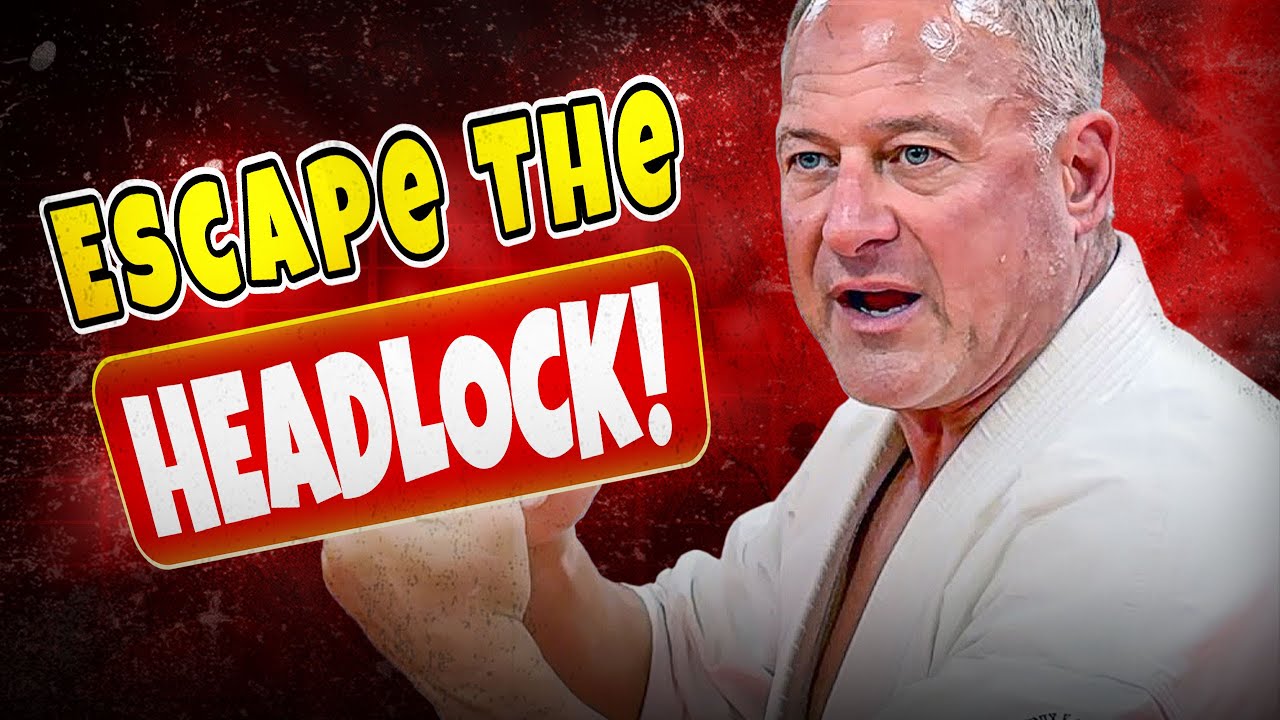
One of the drills I like starts in the worst spot. The video below begins with me saying, “You lost the fight. We’re here.” I’m on the ground, my partner has a headlock, and he’s trying to punch me. That’s not a fun place to start. That’s exactly why we start there.
Here’s the clip if you’d like to see what ground escapes look like in practice.
Watch: Kyokushin Ground Fighting | How to Escape a Headlock Like a Pro
A few lessons from that work apply to almost any bad position on the ground:
Defend the face first. You can’t work an escape while you’re getting hit.
Don’t fight strength with your neck. I tell students not to try to lift their head straight out of a strong headlock. “I’ve just seen more injury” from that.
Use your whole body. Hips, knees, and posts do the work your arms can’t.
Keep what you earn. Once you improve your position, don’t give it back.
I broke the full sequence down in how to escape a headlock.
What ground training gives you
The biggest gift isn’t any single technique. It’s familiarity. Once you’ve been under someone heavier a hundred times in class, with a partner who lets go when you tap, the position stops feeling like the end of the world. You can think. You can breathe. You know where the exits are.
Ground training also makes you better on your feet. When you’ve felt how much a takedown changes things, you become a lot more serious about staying upright, keeping your balance, and not letting someone wrap you up. It’s the same reason we teach takedowns that come off strikes: you understand a position best when you’ve worked it from both sides.
How we train it at The Phoenix Way
Our Adult Class is built as a complete mixed martial arts program: the stand-up is rooted in Kyokushin, the takedowns come from Judo, and the ground work is Jiu-Jitsu based. If you want more time on the mat, our Brazilian Jiu-Jitsu program here in Shrewsbury focuses on groundwork and includes Judo-style throws and takedowns. You learn at your own pace, and sparring is optional.
None of this replaces awareness and de-escalation. Those come first, and a physical response is always the last resort. And self-defense laws vary by state, so know what the law allows in New Jersey or wherever you live.
Questions
Why is ground defense important for self-defense?
Many confrontations end up in grappling range, and falls happen. If you’ve never trained on the ground, being pinned can cause panic. Ground training teaches you to protect yourself, create space, and get back to your feet.
Do I need to be strong to learn ground defense?
No. Strength helps anyone, but Brazilian Jiu-Jitsu is built around leverage and body position. You learn to use your hips, frames, and posts so you’re not relying on raw strength. You’ll likely get stronger along the way, but it isn’t a requirement to start.
Is Brazilian Jiu-Jitsu good for self-defense?
It’s a strong piece of the puzzle, especially for the moments when a confrontation goes to the ground. For self-defense, the goal on the ground is to get up and get away, not to win a match. It works best alongside awareness, de-escalation, and stand-up skills.

Anthony Codispoti
Shuseki Shihan, Founder & Headmaster
Founder and headmaster of The Phoenix Way in Shrewsbury, NJ.
More from Self-Defense


30 days free
We are the only facility in the area confident enough to offer you 30 Days Free. What do you have to lose?
170 Patterson Ave, Shrewsbury, NJ 07702
Claim your free month
Your name and email address will not be sold, shared, or disclosed to anyone. We promise to respect your privacy.

© 2026 The Phoenix Way